Introduction
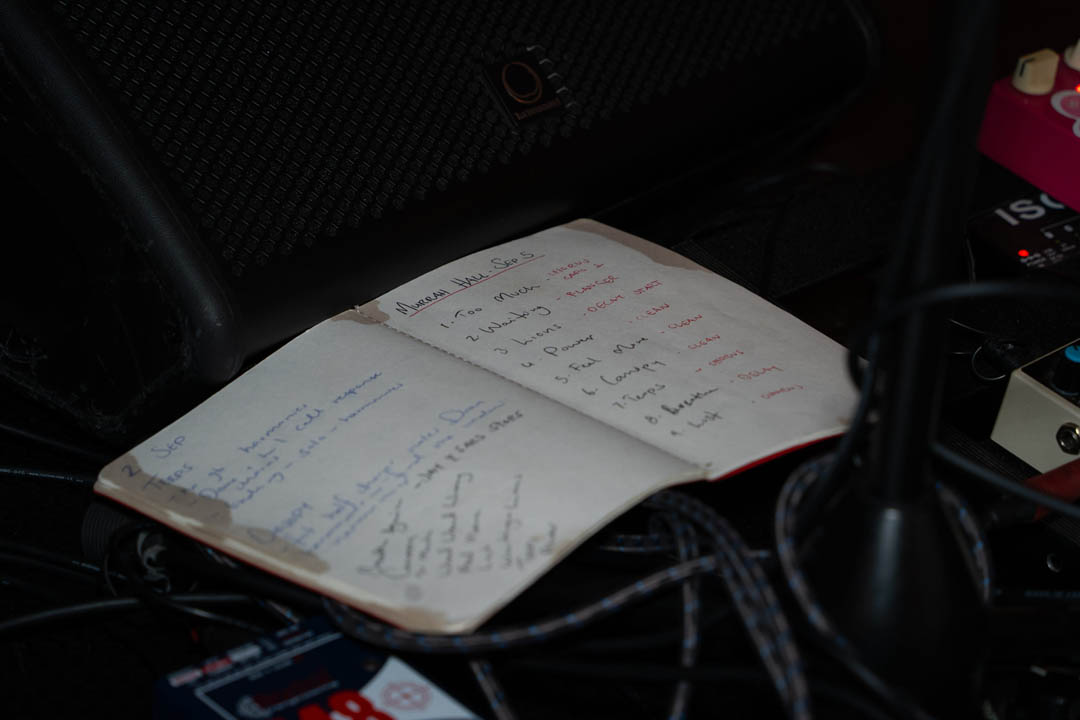
Writing a setlist and having it visible on stage is an important part of preparing for a live performance. It provides a clear structure for the show and ensures that the band moves smoothly from one song to the next without confusion. When musicians are performing under lights, noise, and adrenaline, it can be surprisingly easy to forget what comes next. A setlist acts as a quick reference point that keeps everyone aligned.
A well-planned setlist also helps shape the flow and energy of the performance. Artists often think carefully about how the audience will experience the show, opening with a strong or recognisable song, pacing the middle of the set with dynamics, and building toward a memorable closing moment. Writing the setlist in advance allows the band to rehearse transitions, tune changes, instrument swaps, or moments of stage banter so the show feels cohesive rather than improvised.
Having the setlist physically on stage, often taped to the floor or placed on a monitor, means every band member can glance at it quickly if needed. This helps prevent awkward pauses between songs and ensures that everyone moves through the set at the same pace, particularly if there are cues for endings, extended sections, or changes in arrangement.
A visible setlist also supports the crew and technical team. Sound engineers, lighting operators, and tour managers can follow along and anticipate what is coming next, such as louder songs, quieter moments, or the final track of the set.
Additional information on a setlist that can be helpful include:
The song BPM: this will assist the sound and lighting engineers with gliding through songs they may be less familiar with. The sound technician may use this for audio effects like delay, the lighting technician may use this for visual effects like flash, strobe or colour changes.
Banter: a setlist will remind you when to speak in between songs, and keywords may be helpful in remembering to mention things like merch, a forthcoming release or a thank you to the venue.
Hot tip! Make sure the font is large enough to see from a standing position, and make sure the text and paper are high contrast colours (black and white is always best).
Downloads
Join Our COmmunity
Become part of the network that shapes music scenes across NSW. Get program news, local updates and add your voice to ours.